
Councils use "concierge", "front desk" and "security" interchangeably. Providers do not, and in British Columbia the law does not either. Getting the distinction right before you write a scope avoids paying for the wrong thing — or worse, expecting something your provider is not permitted to do.
Security work in BC is licensed
Security services in British Columbia are regulated under the Security Services Act, administered by the province's Security Programs Division. Businesses providing security services need a security business licence, and individuals working in licensed roles need their own worker licence. The licence categories cover different activities — guarding, alarm monitoring, electronic locking device installation and others are not the same thing.
The practical consequence for a council: "we provide security" is a claim you can verify. Ask for the licence number and check it. A provider who cannot produce one is telling you something.
What a concierge does
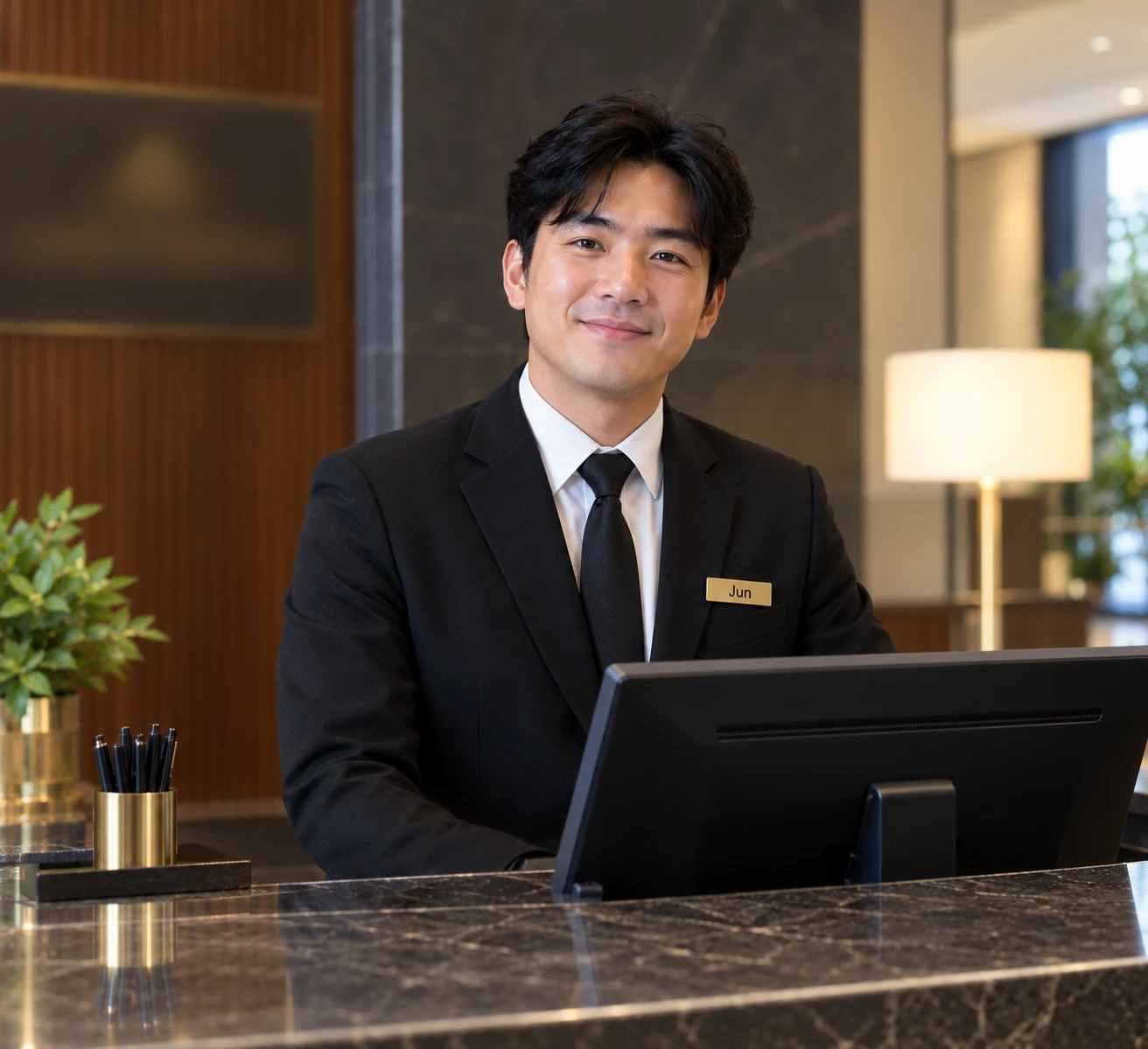
A concierge is the staffed presence at the front of the building, and the role is service and building support rather than enforcement:
- Receiving residents, visitors and trades, and signing contractors in and out with times recorded.
- Taking in, logging and releasing parcels instead of letting them stack up in the lobby.
- Issuing, revoking and recording fobs, cards and keys.
- Booking amenity rooms, guest suites and the moving elevator so two moves never collide.
- Logging anything unusual and escalating it to the right person the same day.
Where monitoring fits
Camera and alarm monitoring and access control administration sit in the licensed space, which is why they are worth asking about specifically. A desk that can watch the cameras during a shift, pull and export footage when an incident is reported, and notice that a camera has been offline for a week is doing something materially different from a desk that can only write an incident note.
That last point is underrated. Most buildings discover their camera system is half-broken at the exact moment they need footage — after an incident, when it is too late to fix.
Patrols are a separate question
Scheduled patrols of parkades, stairwells and the perimeter are guarding work and a distinct service from a staffed desk. Plenty of providers do one and not the other. If your building specifically needs patrols, confirm the provider offers them rather than assuming a concierge contract includes them — and if a provider tells you plainly that patrols are not what they do, treat that as a good sign rather than a gap.
The questions worth asking
- Are you a licensed security business in BC, and what is the licence number?
- Which activities does that licence cover — monitoring, guarding, or both?
- Is the desk staffed by your own employees, and what happens when someone is sick?
- Can your staff administer our access control system, or only report faults in it?
- What record do we get of a shift, and how quickly can footage be retrieved?
The answers separate providers quickly, and none of them require a council to understand security law — only to ask.
Frequently asked
Staffing a front desk this year?
Tell us the building and the hours you have in mind, and we will talk through what the coverage should actually include.